
Every day, more than 30 million people in Dhaka depend on a water system under growing pressure from rapid urbanization, declining groundwater levels, rising energy costs, and climate stress. Increasingly, the challenge facing cities is not only how to produce enough water — but how to manage it more intelligently.
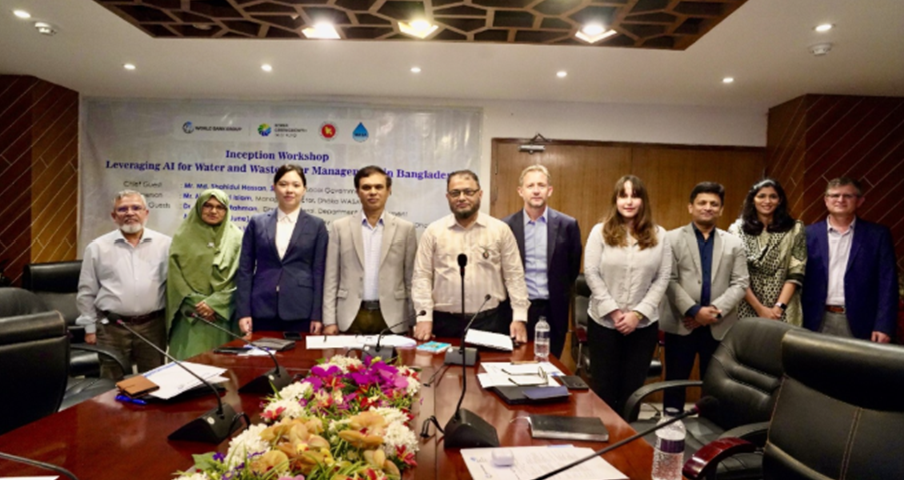
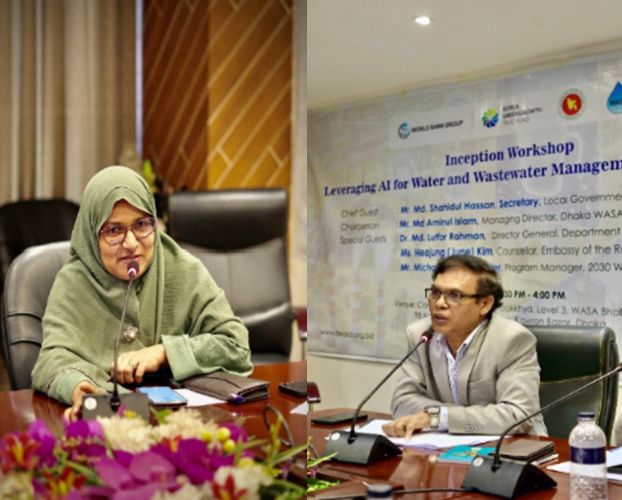
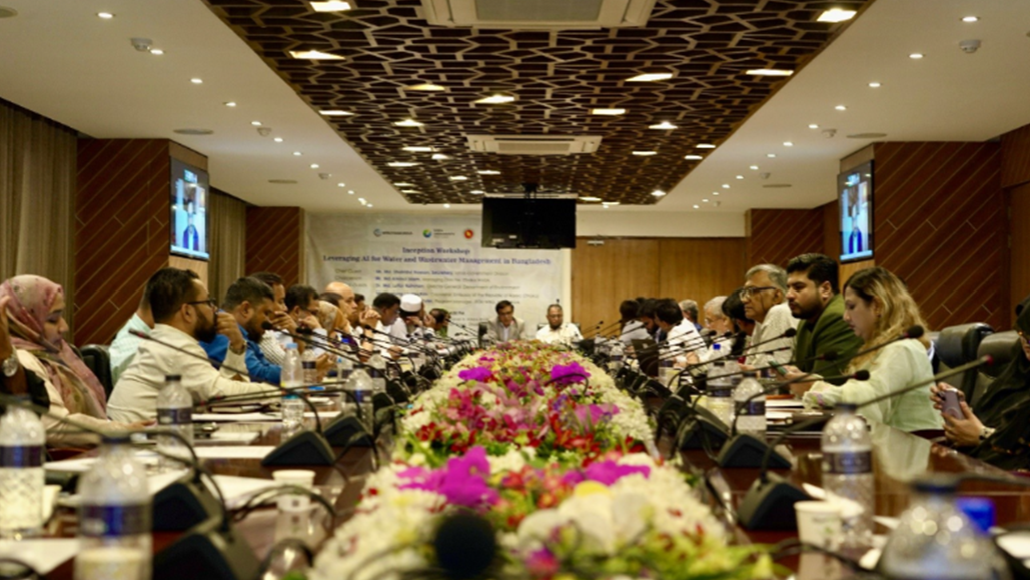
That challenge brought together government officials, utility leaders, technology providers, industry representatives, and development partners in Dhaka on May 10, 2026 for the Inception Workshop for the AI-Ready Intelligent Water Utilities Initiative, supported by the World Bank Group’s 2030 Water Resources Group (2030 WRG) and the Korea Green Growth Trust Fund (KGGTF).
The initiative, to be implemented jointly with Dhaka Water Supply and Sewerage Authority (DWASA), Bengaluru Water Supply and Sewerage Board (BWSSB), and Joburg Water, aims to help utilities move from reactive systems toward predictive, AI-enabled operations. Its focus includes identifying priority areas for AI‑enabled wastewater reuse and management, developing utility-specific AI-readiness roadmaps for priority interventions, building workforce capacity in AI-enabled operational workflows, and establishing AI-4-Reuse Taskforces to strengthen public-private collaboration in wastewater reuse.
From Groundwater Stress to Smart Utilities
Dhaka WASA currently produces approximately 3.2 billion liters of water per day, with more than 70 percent sourced from groundwater. As groundwater tables continue to decline, the utility’s 2030 Roadmap aims to reduce groundwater dependence to 30 percent by expanding surface water treatment capacity.
Participants heard how Dhaka WASA has already begun laying the foundation for digital transformation through initiatives including SCADA integration, the Integrated Water Operation Centre (IWOC), NB-IoT smart meter pilots, and more than 300 Water ATMs serving low-income communities.
At the same time, the utility is working to expand sewerage coverage from 20 percent to 50 percent by 2030 through investments such as the Dasherkandi Sewage Treatment Plant and the Dhaka Sanitation Improvement Project.
Against this backdrop, workshop discussions focused on how AI can strengthen real-time wastewater reuse quality monitoring, improve demand forecasting, detect leaks faster, and support predictive maintenance and robotic pipeline inspections.
“The shift from reactive to predictive operations will be central to improving efficiency and compliance,” said Ms. Hosna Afroza, Joint Secretary, Ministry of Local Government, Rural Development and Cooperatives, Government of Bangladesh.
Reframing Wastewater as a Strategic Resource
A major theme throughout the workshop was the growing recognition that wastewater should be viewed not as a disposal challenge, but as a strategic resource.
Ms. Meghana Rao Pahlajani of 2030 WRG emphasized that cities such as Dhaka, Bengaluru, and Johannesburg are increasingly confronting the same reality: freshwater supplies are under pressure while urban demand continues to rise.
The AI-Ready Intelligent Water Utilities Initiative seeks to help cities respond by embedding AI into operational systems that can optimize treatment processes, reduce energy consumption, improve reuse, and strengthen resilience.
Participants also stressed that successful digital transformation requires more than technology alone. Long-term workforce training, institutional readiness, and blended finance mechanisms will be essential for sustaining AI adoption over time.
Learning from Korea’s Digital Water Transformation
A key focus of the workshop was Korea’s experience in deploying AI and digital technologies across water and wastewater systems.
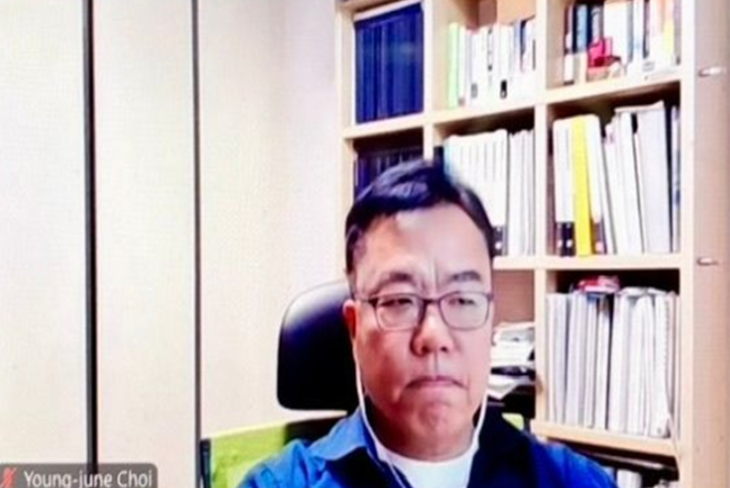
Dr. Young-june Choi from the University of Seoul shared how Korea’s 2010 Water Reuse Act helped establish an integrated digital ecosystem connecting more than 4,374 treatment facilities nationwide.
The Korean experience demonstrated how digital twins, predictive analytics, and automated asset management can help utilities optimize operations, stabilize effluent quality, reduce energy consumption, and strengthen water reuse systems.
Examples discussed during the workshop included AI-driven sewerage management, predictive pipe inspection, and resource recovery systems that transform treatment plants into energy producers.
Korea’s autonomous treatment systems have already demonstrated measurable gains, including:
- Annual power savings of 7.1–20 percent
- Inflow prediction accuracy exceeding 90 percent
- Annual CO2 reductions of approximately 22 tons
“Korea’s experience shows that the future of water security lies in combining clear policy, institutional readiness, and advanced analytics,” said Dr. Choi. “Moving data through algorithms is becoming as important as moving water through pipes.”
Participants noted that Korea’s experience offers lessons not only in technology deployment, but also in how long-term policy commitment and institutional coordination can accelerate digital transformation at scale.
Building the Foundations for AI Adoption
Technology providers and local innovators also highlighted how AI-enabled systems are already improving operational efficiency.
Representatives from Veolia shared examples of digital twin platforms helping utilities reduce energy and chemical use while extending asset life through predictive maintenance. Meanwhile, Bangladeshi innovators demonstrated IoT and AI-enabled sensors capable of monitoring wastewater conditions in real time to improve industrial reuse and optimize treatment processes.
Industrial representatives emphasized, however, that scaling AI adoption will require stronger governance, better data transparency, and more robust monitoring systems. Several participants also highlighted the need for regulatory reforms — particularly around groundwater pricing — to strengthen incentives for wastewater reuse.
Strengthening Korea–Bangladesh Collaboration
Representatives from the Government of Bangladesh, Dhaka WASA, the Embassy of the Republic of Korea, and the World Bank Group underscored the importance of continued collaboration and knowledge exchange.
Ms. Heajung (June) Kim, Counsellor at the Embassy of the Republic of Korea in Dhaka, emphasized that the KGGTF-supported initiative aligns closely with Bangladesh’s need to strengthen wastewater management and climate resilience.
For KGGTF, the initiative reflects a broader effort to connect Korean expertise and innovation with practical development challenges facing cities globally.
Looking Ahead
Mike Webster, Program Manager of the 2030 WRG, underscored that water remains one of the World Bank Group’s highest global priorities and reaffirmed the institution’s strong commitment to the AI‑Ready Intelligent Water Utilities Initiative. He emphasized that developing AI‑enabled wastewater‑reuse roadmaps will be a critical step in accelerating the adoption of AI‑driven reuse and management across South Asia and Africa. The workshop concluded with strong consensus that AI-enabled wastewater reuse is becoming an increasingly important climate and water security solution for rapidly growing cities.
Participants emphasized several key lessons emerging from the discussions:
- Real-time monitoring and data transparency are foundational for effective AI deployment
- Korea’s experience demonstrates that predictive, AI-enabled water management can deliver measurable operational and environmental gains
- Workforce development and knowledge sharing remain essential for sustainable AI adoption
- Regulatory reform and stronger public-private collaboration will be critical for scaling reuse systems
As cities across South Asia and Africa confront growing water stress and rapid urbanization, the discussions in Dhaka reflected a larger global shift already underway: the future of water management will depend not only on physical infrastructure, but also on how effectively utilities can harness data, digital systems, and artificial intelligence to build more resilient and sustainable urban water systems.